
The nose behind the mission.
One of our most valuable team members doesn't carry a clipboard — our detection dog relies on an extraordinary sense of smell to recognize odors associated with hidden mold, helping identify areas that may need a closer look.
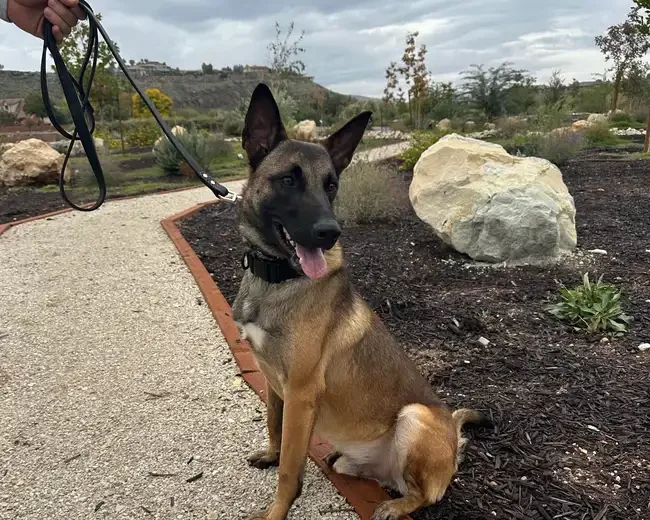
A nose built for the job.
A dog's sense of smell is one of the most advanced detection tools in nature. Dogs have up to 300 million scent receptors — compared to roughly 5–6 million in humans — letting them detect odors at incredibly low concentrations.
That remarkable ability has made detection dogs invaluable in law enforcement, medical research, search and rescue, conservation — and now, mold detection. When properly trained, a mold detection dog can identify odors associated with hidden mold in places the human eye can't easily reach.
Meet our detection dog
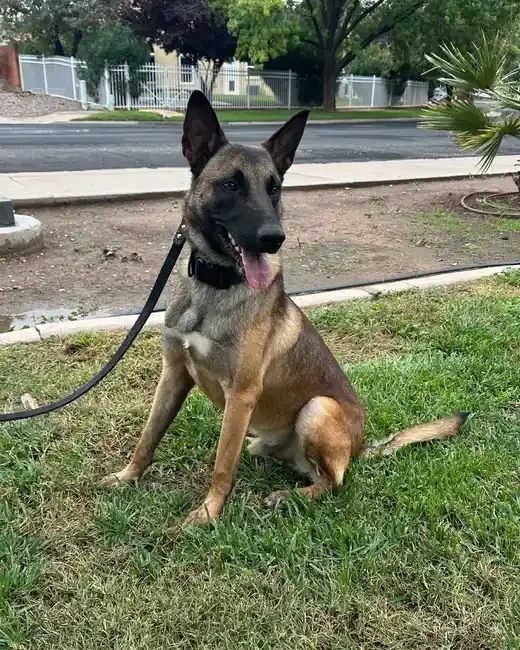
- Name
- Bon
- Breed
- Belgian Malinois
- Birthday
- September 28, 2025
- Favorite toy
- Gappay ball
- Favorite activity
- Working
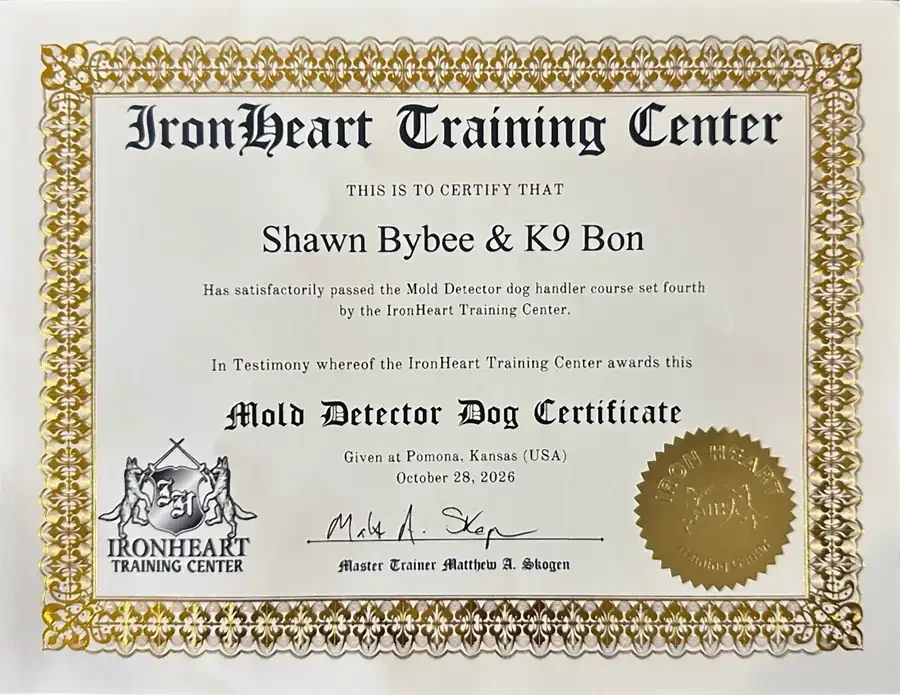
- Certification
- Mold detector dog handler (IronHeart Training Center, 2026)
How our K9 works.
Every detection begins with a systematic search. After arriving, the handler lets the dog acclimate to the space, then works methodically, room by room.
When the dog detects a trained target odor, it gives its trained alert. The handler documents the location and discusses the findings with you — minimizing any disruption to your home or business.
What makes a great detection dog
- Professionally trained
- Exceptional scent-detection ability
- Calm, friendly temperament
- Focused while working
- Reward-based training
- A genuine love of the work
- A trusted part of the detection team
Friendly, focused, and easy to have around.
Is your dog friendly?
Can I pet the dog?
Will the dog damage my home?
Does the dog bark while working?
What if I have pets?
Don't guess about hidden mold.
Get professional, non-invasive detection from a team focused on one thing: helping you understand your property with confidence.
(435) 668-9973